
Connect the structure
Identify sites, meters, equipment, and the data sources that describe them.
12 assets mapped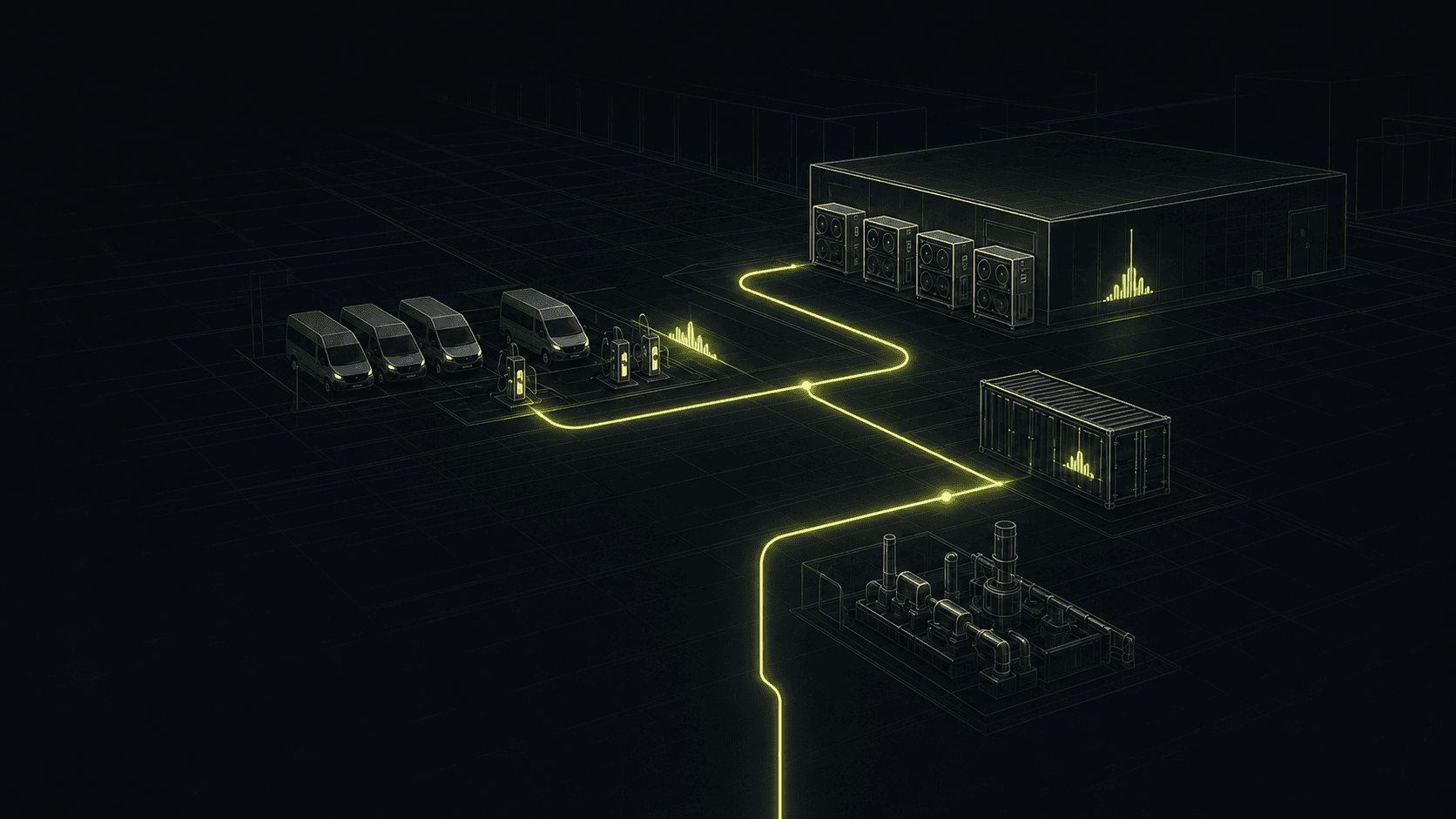
Loadlume Assets
Bring sites, meters, equipment, schedules, and constraints into one structure that shows what is connected, what is available, and what still needs attention.
The operating problem
Flexible demand depends on relationships that interval data alone cannot explain. A compressor belongs to a refrigeration system. That system belongs to a site. Its availability depends on temperature, schedule, operator rules, and what happened moments ago.
Loadlume Assets is designed to keep those relationships intact, so an availability number can be understood before it is used.
The live asset model
Follow Cold Storage 01 as the same operating model gains the context required for a credible flexibility decision.
From inventory to availability
Each step adds context to the same asset record. The result is not a static catalogue; it is a living foundation for forecasting, dispatch, and evidence.
Plan an asset assessment
Identify sites, meters, equipment, and the data sources that describe them.
12 assets mappedAttach schedules, operating bands, site caps, and human approval rules.
6 active constraintsEvaluate flexible capacity only where state, limits, and data quality support it.
1.6 MW availableInputs and outputs
Start with practical data, preserve its source and freshness, and carry the operating context forward to the rest of Loadlume.
Operating inputs
Meter and telemetry dataContinuous or intervalSCADA / BMS contextState and control pointsOperating schedulesPlanned windows and deadlinesOperator constraintsRules and approvals Loadlume AssetsShared operating model
Product outputs
Availability intervalsCapacity with boundariesConstraint changesVisible before decisionsForecast contextInputs for future windowsDispatch eligibilityAsset-level readinessBuilt around real assets
The model stays consistent without pretending that every asset behaves the same way.
Traceable by design
A trustworthy asset model should show more than the latest value. It should preserve what changed, which source changed it, and how the decision state was affected.
Assets FAQ
Technical scope and data availability are confirmed during the initial assessment.
The first model combines available meter data, asset information, schedules, and known operating limits. Additional telemetry and control-system signals can be connected as the assessment develops.
No. The model can begin with the data already available and keep the source quality visible. Live telemetry adds depth, but the platform should never imply a level of confidence the source data cannot support.
Yes. The intended workflow keeps operator-owned limits visible and traceable, including who changed a rule, when it changed, and which availability calculations were affected.
Assets provides the shared hierarchy, state, and constraint context. Forecast uses that model to estimate future availability, while Dispatch uses it to prepare and monitor an approved asset-level plan.
Yes. Mixed portfolios are a core use case. Each asset keeps its own constraints while using a consistent operating structure for availability, decisions, and evidence.
Start with one portfolio
Bring the data, schedules, and limits you have today. We will help identify the right first modeling scope.